


GREAT
EXPERIENCE
With a robust academic and professional background, including leadership roles as Vice-President for Science and Technology and CEO of innovative robotics companies, I consistently deliver outstanding results in the digital landscape. My work spans research, development, and implementation of cyber-physical systems, IoT, computer vision, and smart manufacturing.
AUTONOMY
I excel in my work with a strong sense of autonomy, driving projects independently from concept to deployment. My ability to take initiative and lead complex technological developments has been a key asset in delivering successful and scalable digital solutions.
INVOLVMENT
I actively engage in all phases of the development process, fostering collaboration and synergy within multidisciplinary teams. My commitment to active involvement ensures effective contributions to projects, creating seamless, innovative, and practical digital solutions that address real-world challenges.
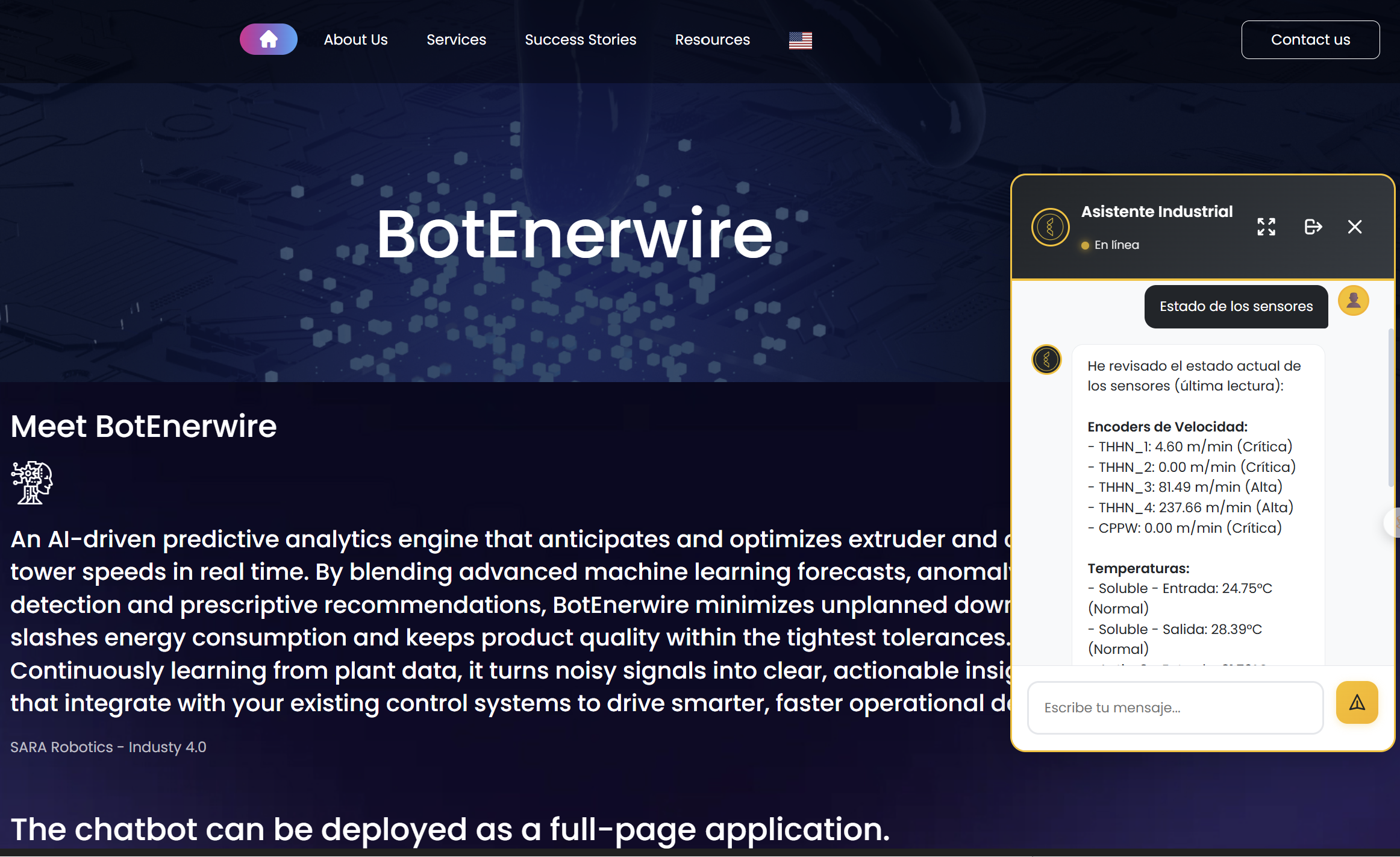
AI-Based Maintance
Bot Enerwire
AI-Based Maintance
Bot Enerwire
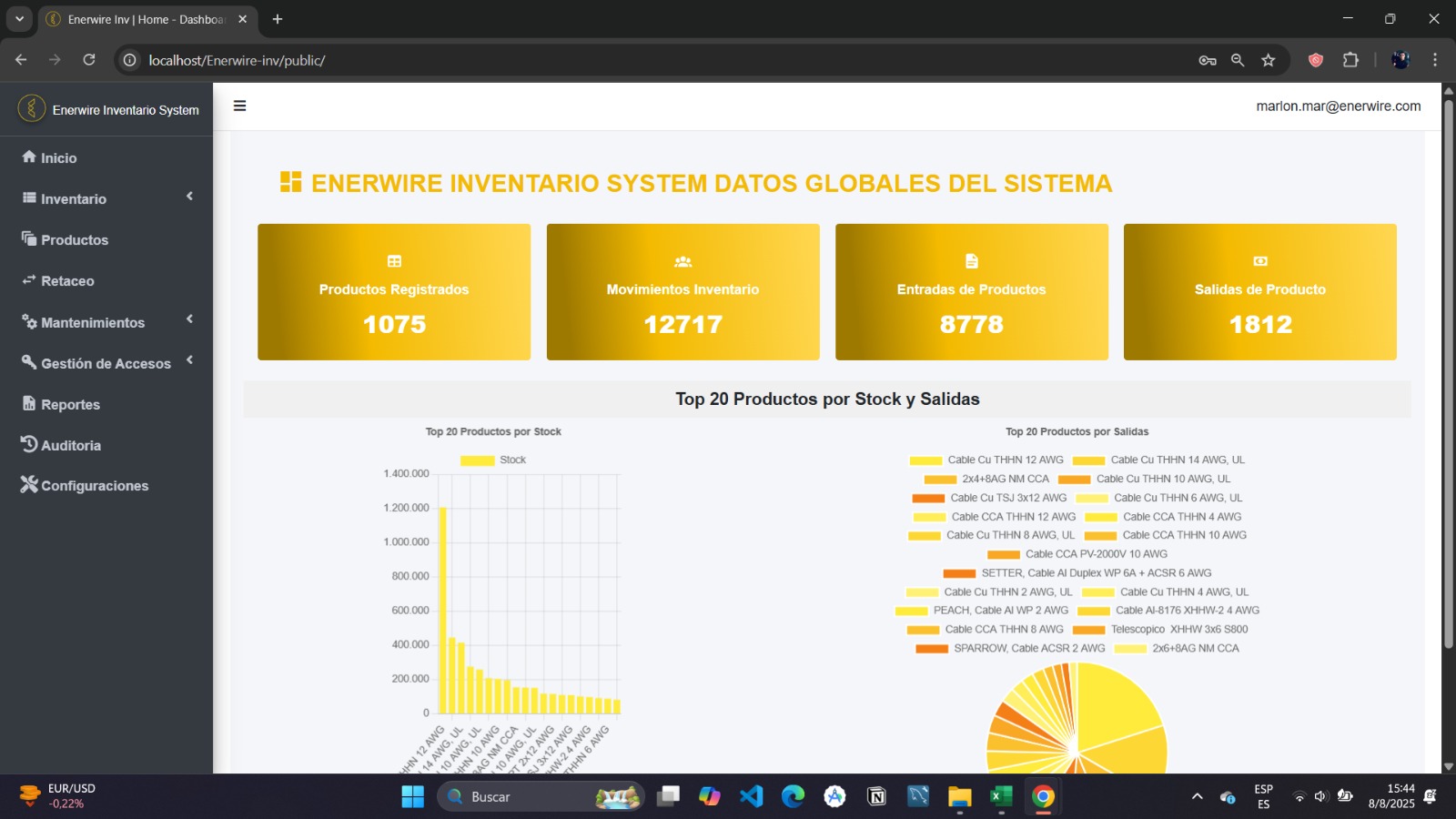
Smart Warehouse
Real Time
Smart Warehouse
Real Time
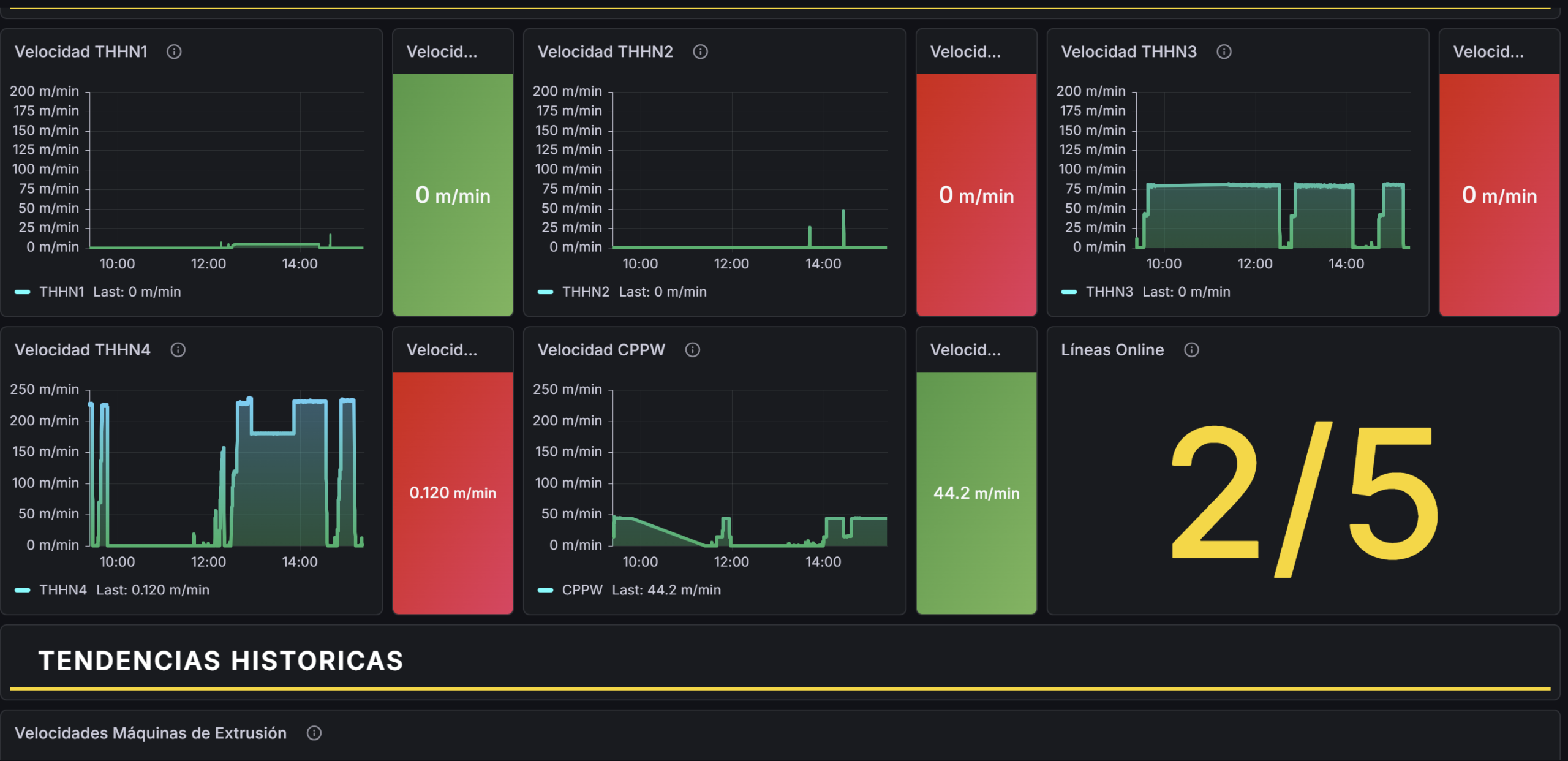
Enerwire Smart Manufacturing
UI / UX
At Enerwire, we are implementing an advanced monitoring and analytics system designed to optimize our cable extrusion process. This innovative solution continuously measures the speed of cable extrusion and the temperature throughout the production line. By capturing these critical parameters in real time, the system enables precise monitoring of process stability and product quality.
The collected data is not only visualized for operators and engineers but is also analyzed using advanced analytics and machine learning algorithms. This allows us to detect patterns, identify anomalies, and predict potential issues before they impact production. With predictive maintenance capabilities, the system can anticipate equipment wear or failures, enabling proactive interventions that minimize downtime and extend the lifespan of our machinery.
Beyond maintenance, the system provides valuable insights for process optimization. By correlating speed and temperature data with product quality outcomes, we can fine-tune production parameters, reduce waste, and ensure consistent, high-quality output. The platform is scalable and can be integrated with other sensors and data sources, paving the way for future enhancements such as automated process adjustments, energy efficiency monitoring, and integration with our enterprise resource planning (ERP) systems.
With this digital transformation, Enerwire is taking a significant step towards Industry 4.0, leveraging real-time data, advanced analytics, and intelligent automation to deliver superior products, improve operational efficiency, and maintain a competitive edge in the market.
Enerwire Smart Manufacturing
UI / UX
Rehabilitation Robotics Kinematics, Dynamics, and Control Techniques
Springer, Switzerland AG 2025

Current status and perspectives of lower limb exoskeleton rehabilitation robots
Rehabilitation Robotics. Springer en Cham, Suiza.
Internet of things challenges for medical solutions
Elsevier
Internet of things challenges for medical solutions
Elsevier
Remote patient monitoring
Elsevier
Remote patient monitoring
Elsevier
A categorization of medical robots by their applications
Elsevier
A categorization of medical robots by their applications
Elsevier
Uncertainties Found in Dynamic Systems
Rehabilitation Robotics. Springer en Cham, Suiza.
Adaptive Control of Robotics Rehabilitation Robots
Rehabilitation Robotics. Springer en Cham, Suiza.
Impedance Control
Rehabilitation Robotics. Springer en Cham, Suiza.
Robust Control Lyapunov Functions
Rehabilitation Robotics. Springer en Cham, Suiza.
DAlembert General Formulation
Rehabilitation Robotics. Springer en Cham, Suiza.
Lagrange-Euler Approach
Rehabilitation Robotics. Springer en Cham, Suiza.
Newton-Euler Formulation
Rehabilitation Robotics. Springer en Cham, Suiza.
Kinematics Analysis of Exoskeleton Robots
Rehabilitation Robotics. Springer en Cham, Suiza.
Kinematics Analysis of Exoskeleton Robots
Rehabilitation Robotics. Springer en Cham, Suiza.
Mathematical Tools for Exoskeleton Robots
Rehabilitation Robotics. Springer en Cham, Suiza.
Mathematical Tools for Exoskeleton Robots
Rehabilitation Robotics. Springer en Cham, Suiza.
Fundamentals of Exoskeleton Robots for Rehabilitation
Rehabilitation Robotics. Springer, Cham
Fundamentals of Exoskeleton Robots for Rehabilitation
Springer, Switzerland
Development of a System for Classifying Rambutans According to Maturity based on Convolutional Neural Networks
CITDES, Panamá
Robust H-Infinity Control of Delta Parallel Robot With Disturbance and Parametric Uncertainties.
LACAR, San Salvador, El Salvador
Robust H-Infinity Control of Delta Parallel Robot With Disturbance and Parametric Uncertainties.
LACAR, San Salvador, El Salvador
Schrodinger Equation for Mobility Problem in a N-Channel MOSFET by GNU Octave.
LAEDC, Guatemala
Schrodinger Equation for Mobility Problem in a N-Channel MOSFET by GNU Octave.
LAEDC, Guatemala
This paper aims to develop a numerical method to solve the Schrodinger equation in a time-dependent dimension for mobility problem in a N-MOSFET using the finite difference method. The proposed method is implemented using the GNU Octave tool and the fsolve function to solve nonlinear algebraic equations. This method is expected to provide an accurate and efficient solution to the mobility problem in a N-MOSFET, which could have applications in fields such as quantum physics and electronic engineering.
Innovative Methodological Approaches in STEAM Education
LAEDC, Guatemala
Innovative Methodological Approaches in STEAM Education
LAEDC, Guatemala
This article provides an analysis of the state of the art of the STEAM approach in education, the different emergent methodologies that accompany this new paradigm, and the disruptive technologies that are being integrated. Then, a case of success of recommended methodologies in a robotics and disruptive technologies academy is presented. Finally, the challenges that educational institutions must face to effectively integrate STEAM education are addressed.
Study case: robot selection based on simulations and financial indicator. Sustainable Engineering for a Diverse, Equitable, and Inclusive Future at the Service of Education, Research, and Industry for a Society 5.0
LACCEI, San José, Costa Rica
Study case: robot selection based on simulations and financial indicator. Sustainable Engineering for a Diverse, Equitable, and Inclusive Future at the Service of Education, Research, and Industry for a Society 5.0
LACCEI, San José, Costa Rica
A Five-Bar Mechanism Synthesis for Pick and Place Applications
CONESCAPAN, Panamá
Hand Tracker for the Early Detection of Neurodegenerative Parkinson’s Disease
CONESCAPAN, Panamá
Hand Tracker for the Early Detection of Neurodegenerative Parkinson’s Disease
CONESCAPAN, Panamá
This article provides a prototype analysis for Parkin-son's disease; focused on the anomalies on the deterioration of nerve cells, which produce rhythmic shaking (tremors), generally a warning sign for a diagnosis of Parkinson's.
Sustainability and Mechanical Performance Evaluation of Sisal Fibers
CONESCAPAN, Panamá
A novel Internet of Things Device for blind people using ESP32
CONESCAPAN, Panamá
Electricity Generation with Internal Combustion Engines Using Liquefied Natural Gas (LNG): Efficiency, Environmental Impact, and Future Perspectives.
CONESCAPAN, Panamá
Best Practices for PayPal Integration: An Audit and Security-Based Approach
CONESCAPAN, Panamá
Comprehensive Overview of CBB Detection Technologies and Image Database Development
ICMLANT, San Salvador, El Salvador
Classification of Apple Growing Region by Vis-Near Infrared Spectroscopy Coupled with Machine Learning and Deep Learning Methods
ICMLANT, San Salvador, El Salvador
Artificial Intelligence for All: Challenges and Harnessing Opportunities in AI Democratization
ICMLANT, San Salvador, El Salvador
Current Status, Challenges, and Future Trends
CONCAPAN, Panamá
Harnessing Artificial Intelligence in Education: Innovations, Opportunities, and Challenges
CONCAPAN, Panamá
Harnessing Artificial Intelligence in Education: Innovations, Opportunities, and Challenges
CONCAPAN, Panamá
This article examines how artificial intelligence is reshaping education through personalized learning, administrative automation, and immersive technologies. It highlights innovations such as intelligent tutoring systems, automatic assessment, and VR/AR tools, while addressing opportunities and challenges related to ethics, privacy, and equity. The study underscores AI’s potential to enhance educational effectiveness and adapt teaching methods in STEAM education.
Electromobility in Central America: An Analysis of Policies and Regulations.
CONCAPAN, Panamá
An IMU-based Gait Acquisition System for Biomechanical Analysis
CONCAPAN, Panamá
Design of a wheel legged robot
Kaunas, Lithuania
A Python-based Algorithm for Production and Inventory Optimization
LACCEI, México
Intrusion Detection in Smart Homes Using K-Nearest Neighbors and Decision Trees Algorithm on IoT Network Traffic for Attack Classification
LACCEI 2025, México
Intrusion Detection in Smart Homes Using K-Nearest Neighbors and Decision Trees Algorithm on IoT Network Traffic for Attack Classification
LACCEI 2025, México
Synergies Between Nuclear Energy and Green Hydrogen: Potential for a Sustainable Energy Transition
Cartagena, Colombia
Forward and Inverse Kinematics of a 5R Parallel Planar Robot
Cartagena, Colombia
Harnessing Large Language Models Applications in Smart Manufacturing
LAEDC, Guadalajara, México
Personalizing STEAM Education with AI: The AIBOT Agent of the STEAM Robotics Academy
LAEDC, Guadalajara, México
Advances and Challenges in Marine Monitoring Technologies in Latin America: A Systematic Review
LAEDC, Guadalajara, México
Monocyte and Lymphocyte Classifier from Blood Smear Digital Images Using K-Means Clustering,
LAEDC, Guadalajara, México
BMO 2.0 Rescue Robotic Prototype for Victim Localization in Hostile Terrain
LAEDC, Guadalajara, México
Advances in Trainable Molecular Algorithms for Biological Computing with DNA
LAEDC, Guadalajara, México
Dynamic Modeling of the ALICE Lower Limb Exoskeleton Using Lagrange-Euler Formulation
LAEDC, Guadalajara, Mexico
Eye Tracking for the Detection of Neurodegenerative Diseases: A Systematic Review
LAEDC, Guadalajara, México
Ad Astra Project 2024/2025: Implementation of Renewable Energy for Social Development in Vulnerable Communities in El Salvador
LAEDC, Guadalajara, Mexico
Design and Construction of a SCARA Robot for Automated Assembly Applications
CONESCAPAN, Tegucigalpa, Honduras
Enhancing STEM Learning through Augmented Reality: Introducing Robotics to the Next Generation
CONESCAPAN, Tegucigalpa, Honduras
Smart Transformers in Distribution Grids: Opportunities and Challenges for Deployment in Latin America
CONESCAPAN, Tegucigalpa, Honduras
Design of a final effector applying soft robotics TPU patterns
CONESCAPAN, Tegucigalpa, Honduras
Design of a final effector applying soft robotics TPU patterns
CONESCAPAN, Tegucigalpa, Honduras
This project addresses the limitations of current soft gripper end effectors that do not rely on compressed air and struggle to handle fragile foods and solid objects. The lack of research on “soft grippers” based on shape and materials hinders their industrial use and prevents cost savings from eliminating compressed air. To overcome this, a two-finger gripper with a TPU interior will be developed, using the V-Model methodology for structured development and validation. Initial prototypes will be created with PLA, followed by TPU for behavior analysis, with extrusion and line width adjustments to enhance strength and adaptability. A textured surface will be applied for optimal non-slip grip. The results demonstrate that the structure can withstand prolonged use with minimal wear and deformation, even when handling fragile or weighted objects. The project concludes that leveraging 3D printing and the honeycomb principle for soft gripper prototypes significantly improves industrial processing capabilities, offering a cost-effective and efficient solution with potential for future enhancements and diverse applications.
Categorization of ordering methods, advantages and disadvantages of the use of drones in the last mile
CONCAPAN XLIII, San Salvador, El Salvador
Categorization of ordering methods, advantages and disadvantages of the use of drones in the last mile
CONCAPAN XLIII, San Salvador, El Salvador
Direct Kinematic of Planar Robot 3-RRR Using Geometric and Numerical Methods
CONCAPAN XLIII, San Salvador, El Salvador
Real-Time IIoT Cloud-Based Monitoring and Analytics for Industrial Maintenance Management
CONCAPAN XLIII, San Salvador, El Salvador
Real-Time IIoT Cloud-Based Monitoring and Analytics for Industrial Maintenance Management
CONCAPAN XLIII, San Salvador, El Salvador
Discrete Time Second Order Sliding Mode Control for a Lower Limb Exoskeleton
CONCAPAN XLIII, El Salvador
Discrete Time Second Order Sliding Mode Control for a Lower Limb Exoskeleton
CONCAPAN XLIII, El Salvador
Development of an Autonomous Agricultural Robot Prototype for Sowing and Fertilizing Grains,
CONCAPAN XLIII, El Salvador
Development of an Autonomous Agricultural Robot Prototype for Sowing and Fertilizing Grains,
CONCAPAN XLIII, El Salvador
ZenIA: An Artificial Intelligence-Based Robotic System for Elderly Healthcare Assistance
ICMLANT, INDIA
ZenIA: An Artificial Intelligence-Based Robotic System for Elderly Healthcare Assistance
ICMLANT, INDIA
Characterization of Materials for 3D Printing Using Fused Deposition Modeling (FDM) for Robotic Applications
CONCAPAN XLIII, El Salvador
Low-cost Edge Gateway Architecture for IIoT Interoperability in Industry
ICMLANT, INDIA
Low-cost Edge Gateway Architecture for IIoT Interoperability in Industry
ICMLANT, INDIA
Towards Ethical Artificial Intelligence: A Review of XAI Methods in Healthcare
ICMLANT, INDIA
Forecasting renewable energy curtailment using ARX models: A case study of Honduras during COVID-19
ICMLANT, INDIA
Direct and Inverse Kinematics of a 3RRR Symmetric Planar Robot: An Alternative of Active Joints.
Symmetry (2024, 16, 590)
Coffee leaf rust and berry borer management in agroforestry systems: A systematic literature review.
Smart Agricultural Technology
Data-Driven Model Predictive Control for Trajectory Tracking in UAV-Manipulator Systems
IEEE Access, vol. 13.
Model Predictive Contouring Control With Barrier and Lyapunov Functions for Stable Path-Following in UAV Systems
IEEE Access ( Volume: 13)
Current status and perspectives of lower limb exoskeleton rehabilitation robots
Rehabilitation Robotics. Springer en Cham, Suiza.
Internet of things challenges for medical solutions
Elsevier
Remote patient monitoring
Elsevier
A categorization of medical robots by their applications
Elsevier
Uncertainties Found in Dynamic Systems
Rehabilitation Robotics. Springer en Cham, Suiza.
Adaptive Control of Robotics Rehabilitation Robots
Rehabilitation Robotics. Springer en Cham, Suiza.
Impedance Control
Rehabilitation Robotics. Springer en Cham, Suiza.
Robust Control Lyapunov Functions
Rehabilitation Robotics. Springer en Cham, Suiza.
Robust Control Strategies
Rehabilitation Robotics. Springer en Cham, Suiza.
DAlembert General Formulation
Rehabilitation Robotics. Springer en Cham, Suiza.
Lagrange-Euler Approach
Rehabilitation Robotics. Springer en Cham, Suiza.
Newton-Euler Formulation
Rehabilitation Robotics. Springer en Cham, Suiza.
Kinematics Analysis of Exoskeleton Robots
Rehabilitation Robotics. Springer en Cham, Suiza.
Mathematical Tools for Exoskeleton Robots
Rehabilitation Robotics. Springer en Cham, Suiza.
Fundamentals of Exoskeleton Robots for Rehabilitation
Rehabilitation Robotics. Springer, Cham
Development of a System for Classifying Rambutans According to Maturity based on Convolutional Neural Networks
CITDES, Panamá
Robust H-Infinity Control of Delta Parallel Robot With Disturbance and Parametric Uncertainties.
LACAR, San Salvador, El Salvador
Schrodinger Equation for Mobility Problem in a N-Channel MOSFET by GNU Octave.
LAEDC, Guatemala
Innovative Methodological Approaches in STEAM Education
LAEDC, Guatemala
Study case: robot selection based on simulations and financial indicator. Sustainable Engineering for a Diverse, Equitable, and Inclusive Future at the Service of Education, Research, and Industry for a Society 5.0
LACCEI, San José, Costa Rica
A Five-Bar Mechanism Synthesis for Pick and Place Applications
CONESCAPAN, Panamá
Hand Tracker for the Early Detection of Neurodegenerative Parkinson’s Disease
CONESCAPAN, Panamá
Sustainability and Mechanical Performance Evaluation of Sisal Fibers
CONESCAPAN, Panamá
A novel Internet of Things Device for blind people using ESP32
CONESCAPAN, Panamá
Electricity Generation with Internal Combustion Engines Using Liquefied Natural Gas (LNG): Efficiency, Environmental Impact, and Future Perspectives.
CONESCAPAN, Panamá
Best Practices for PayPal Integration: An Audit and Security-Based Approach
CONESCAPAN, Panamá
Comprehensive Overview of CBB Detection Technologies and Image Database Development
ICMLANT, San Salvador, El Salvador
Classification of Apple Growing Region by Vis-Near Infrared Spectroscopy Coupled with Machine Learning and Deep Learning Methods
ICMLANT, San Salvador, El Salvador
Artificial Intelligence for All: Challenges and Harnessing Opportunities in AI Democratization
ICMLANT, San Salvador, El Salvador
Current Status, Challenges, and Future Trends
CONCAPAN, Panamá
Harnessing Artificial Intelligence in Education: Innovations, Opportunities, and Challenges
CONCAPAN, Panamá
Electromobility in Central America: An Analysis of Policies and Regulations.
CONCAPAN, Panamá
An IMU-based Gait Acquisition System for Biomechanical Analysis
CONCAPAN, Panamá
Design of a wheel legged robot
Kaunas, Lithuania
A Python-based Algorithm for Production and Inventory Optimization
LACCEI, México
Intrusion Detection in Smart Homes Using K-Nearest Neighbors and Decision Trees Algorithm on IoT Network Traffic for Attack Classification
LACCEI 2025, México
Synergies Between Nuclear Energy and Green Hydrogen: Potential for a Sustainable Energy Transition
Cartagena, Colombia
Forward and Inverse Kinematics of a 5R Parallel Planar Robot
Cartagena, Colombia
Harnessing Large Language Models Applications in Smart Manufacturing
LAEDC, Guadalajara, México
Personalizing STEAM Education with AI: The AIBOT Agent of the STEAM Robotics Academy
LAEDC, Guadalajara, México
Advances and Challenges in Marine Monitoring Technologies in Latin America: A Systematic Review
LAEDC, Guadalajara, México
Monocyte and Lymphocyte Classifier from Blood Smear Digital Images Using K-Means Clustering,
LAEDC, Guadalajara, México
BMO 2.0 Rescue Robotic Prototype for Victim Localization in Hostile Terrain
LAEDC, Guadalajara, México
Advances in Trainable Molecular Algorithms for Biological Computing with DNA
LAEDC, Guadalajara, México
Dynamic Modeling of the ALICE Lower Limb Exoskeleton Using Lagrange-Euler Formulation
LAEDC, Guadalajara, Mexico
Eye Tracking for the Detection of Neurodegenerative Diseases: A Systematic Review
LAEDC, Guadalajara, México
Ad Astra Project 2024/2025: Implementation of Renewable Energy for Social Development in Vulnerable Communities in El Salvador
LAEDC, Guadalajara, Mexico
Design and Construction of a SCARA Robot for Automated Assembly Applications
CONESCAPAN, Tegucigalpa, Honduras
Enhancing STEM Learning through Augmented Reality: Introducing Robotics to the Next Generation
CONESCAPAN, Tegucigalpa, Honduras
Smart Transformers in Distribution Grids: Opportunities and Challenges for Deployment in Latin America
CONESCAPAN, Tegucigalpa, Honduras
Design of a final effector applying soft robotics TPU patterns
CONESCAPAN, Tegucigalpa, Honduras
Categorization of ordering methods, advantages and disadvantages of the use of drones in the last mile
CONCAPAN XLIII, San Salvador, El Salvador
Direct Kinematic of Planar Robot 3-RRR Using Geometric and Numerical Methods
CONCAPAN XLIII, San Salvador, El Salvador
Real-Time IIoT Cloud-Based Monitoring and Analytics for Industrial Maintenance Management
CONCAPAN XLIII, San Salvador, El Salvador
Discrete Time Second Order Sliding Mode Control for a Lower Limb Exoskeleton
CONCAPAN XLIII, El Salvador
Development of an Autonomous Agricultural Robot Prototype for Sowing and Fertilizing Grains,
CONCAPAN XLIII, El Salvador
ZenIA: An Artificial Intelligence-Based Robotic System for Elderly Healthcare Assistance
ICMLANT, INDIA
Characterization of Materials for 3D Printing Using Fused Deposition Modeling (FDM) for Robotic Applications
CONCAPAN XLIII, El Salvador
Low-cost Edge Gateway Architecture for IIoT Interoperability in Industry
ICMLANT, INDIA
Towards Ethical Artificial Intelligence: A Review of XAI Methods in Healthcare
ICMLANT, INDIA
Forecasting renewable energy curtailment using ARX models: A case study of Honduras during COVID-19
ICMLANT, INDIA
Direct and Inverse Kinematics of a 3RRR Symmetric Planar Robot: An Alternative of Active Joints.
Symmetry (2024, 16, 590)
Coffee leaf rust and berry borer management in agroforestry systems: A systematic literature review.
Smart Agricultural Technology
Data-Driven Model Predictive Control for Trajectory Tracking in UAV-Manipulator Systems
IEEE Access, vol. 13.
Model Predictive Contouring Control With Barrier and Lyapunov Functions for Stable Path-Following in UAV Systems
IEEE Access ( Volume: 13)
- Blog
What is Industry 4.0?
What is Industry 4.0?
January 16, 2026
The term Industry 4.0 refers to a new industrial revolution that integrates disruptive technologies such as the Industrial Internet of Things (IIoT), Cloud Computing, Artificial Intelligence, autonomous systems, and robotics to create fully interconnected production systems and value chains. These systems enable the collection, processing, and analysis of real-time data, optimizing decision-making and the execution of intelligent actions in the real world, with a high degree of flexibility, customization, and collaboration between people and machines”. Dr. Manuel Cardona, SARA Robotics, CEO & Founder
- Business
- Cars
The future of EVs

The future of EVs
October 9, 2023
Electric Vehicles (EVs) are no longer a futuristic concept—they are rapidly becoming a cornerstone of the global transportation landscape. As governments, industries, and consumers increasingly prioritize sustainability, the future of EVs looks brighter than ever. Here’s a glimpse into what lies ahead for electric mobility.
1. Technological Advancements
Battery technology is evolving at an unprecedented pace. Solid-state batteries promise higher energy density, faster charging times, and improved safety compared to current lithium-ion batteries. This means EVs will soon travel longer distances on a single charge, making them more practical for everyday use.
2. Expanding Charging Infrastructure
One of the biggest hurdles for EV adoption has been charging accessibility. The future will see a vast expansion of fast-charging networks, including ultra-fast chargers capable of replenishing batteries in minutes. Wireless charging and smart grid integration will further simplify the charging experience.
3. Affordability and Accessibility
As production scales and technology matures, EVs are becoming more affordable. Governments worldwide are offering incentives and subsidies, making EV ownership accessible to a broader demographic. Expect a surge in diverse EV models catering to different needs and budgets.
4. Integration with Renewable Energy
EVs will increasingly be integrated with renewable energy sources. Vehicle-to-grid (V2G) technology will allow EVs to feed electricity back into the grid during peak demand, enhancing grid stability and promoting cleaner energy use.
5. Autonomous and Connected Vehicles
The convergence of EVs with autonomous driving and connected vehicle technologies will revolutionize mobility. Self-driving EVs promise safer roads, optimized traffic flow, and new business models like autonomous ride-sharing.
6. Environmental Impact
Widespread EV adoption will significantly reduce greenhouse gas emissions and air pollution, contributing to global climate goals. However, sustainable sourcing of battery materials and recycling will be critical to minimizing environmental footprints.
Conclusion
The future of EVs is not just about replacing gasoline cars; it’s about transforming how we think about transportation, energy, and sustainability. With continuous innovation and supportive policies, EVs will drive us toward a cleaner, smarter, and more connected world.
- Blockchain
- Computing
Blockchain Technology

Blockchain Technology
September 2, 2023
Blockchain technology is far more than just the foundation of cryptocurrencies like Bitcoin; it is a transformative innovation reshaping data management, security, and trust across various domains—including the rapidly growing Internet of Things (IoT).
At its core, blockchain is a decentralized and distributed ledger that records transactions in a secure, transparent, and tamper-resistant way. Unlike traditional centralized databases, blockchain organizes data into cryptographically linked blocks forming a chronological chain. This design ensures immutability and integrity, as altering any block requires consensus from the network participants. Blockchains can be public or private, with consensus mechanisms such as Proof of Work (PoW) and Proof of Stake (PoS) enabling trust without centralized control.
Beyond cryptocurrencies, blockchain’s applications are vast. In supply chain management, it enhances transparency and traceability, allowing stakeholders to verify product origins and movements. In identity management, it empowers individuals with control over their personal data, improving privacy and security. Smart contracts automate complex agreements, reducing intermediaries in legal, financial, and business processes. Voting systems benefit from blockchain’s transparency and fraud resistance, increasing electoral trust.
Blockchain and IoT
The integration of blockchain with the Internet of Things (IoT) is particularly promising. IoT devices generate massive amounts of data and often operate in decentralized, heterogeneous environments. Blockchain can provide a secure, tamper-proof ledger for IoT data, enabling trusted device-to-device communication without relying on centralized servers. This enhances security, prevents data manipulation, and supports automated transactions via smart contracts—for example, enabling autonomous machine payments or supply chain automation.
Challenges and Future Outlook
Despite its potential, blockchain faces challenges such as scalability limitations, high energy consumption in some consensus models, and regulatory uncertainties. Interoperability between different blockchain platforms and establishing robust security standards remain active areas of research.
As these challenges are addressed, blockchain combined with IoT and other emerging technologies is poised to revolutionize industries by enabling secure, transparent, and efficient data sharing and automation. Its core principles of decentralization, transparency, and security offer solutions to many digital trust issues, making blockchain a critical technology for the future of connected devices and beyond.
- Computing
Quantum Computing

Quantum Computing
September 2, 2023
Quantum Computing is a cutting-edge field that explores the use of quantum-mechanical phenomena to perform computations. Unlike classical computers that use bits as the fundamental unit of information, quantum computers use quantum bits or qubits, which can exist in multiple states simultaneously due to the principles of superposition and entanglement. In this discussion, we will explore the fundamentals of quantum computing, its potential applications, and some of the challenges it faces.
Quantum Computing Fundamentals:
Quantum computers leverage the unique properties of qubits to perform calculations at a scale that classical computers cannot achieve. Superposition allows qubits to represent both 0 and 1 simultaneously, and entanglement enables the state of one qubit to be dependent on the state of another, even if they are physically separated. Quantum gates manipulate these qubits to perform operations, and quantum algorithms harness these properties for solving specific problems more efficiently.
Potential Applications:
Quantum computing holds immense promise in various domains, including cryptography, optimization, drug discovery, and materials science. One notable application is in breaking current encryption methods, which could have both positive and negative implications for cybersecurity. Quantum computers can also revolutionize supply chain optimization, simulate quantum systems accurately, and discover new materials with extraordinary properties. These applications have the potential to reshape industries and scientific research.
Challenges in Quantum Computing:
Despite its potential, quantum computing faces several significant challenges. One key challenge is maintaining the stability of qubits. Qubits are highly susceptible to environmental factors like temperature and electromagnetic radiation, making error correction a daunting task. Developing error-correcting codes and stable qubit technologies is crucial for practical quantum computing. Moreover, building scalable quantum hardware remains a considerable engineering challenge, with quantum computers today being in their infancy.
Quantum Computing and the Future:
The growth of quantum computing is inevitable, and its impact on various industries will be profound. Organizations and researchers are racing to develop quantum hardware, algorithms, and applications. Quantum supremacy, the point at which quantum computers surpass classical computers in specific tasks, is an exciting milestone on this journey. As quantum technologies mature, we can anticipate transformative breakthroughs in cryptography, optimization, and scientific discovery, ushering in a new era of computing and problem-solving.
In conclusion, quantum computing represents a revolutionary shift in the world of computation. Its unique properties and potential applications make it a highly promising field, although it is still in the early stages of development. Overcoming the challenges associated with quantum computing will be essential for realizing its full potential and reshaping various industries in the years to come.
- DevOps
- Web
DevOps and CI/CD

DevOps and CI/CD
September 2, 2023
DevOps and Continuous Integration/Continuous Deployment (CI/CD) are two closely related practices that have revolutionized software development and deployment processes in recent years. They represent a paradigm shift in how software is built, tested, and delivered, enabling organizations to achieve faster release cycles, higher quality software, and improved collaboration between development and operations teams. In this discussion, we will delve into the core principles and benefits of DevOps and CI/CD, their role in modern software development, and some best practices for implementing them effectively.
DevOps is a cultural and technical approach that emphasizes collaboration, communication, and integration between software development (Dev) and IT operations (Ops) teams. It aims to automate and streamline the entire software development lifecycle, from code development to production deployment. DevOps encourages a shared responsibility for the entire process, breaking down silos that often exist between these traditionally separate teams. Key principles include automation, continuous monitoring, and a focus on delivering value to the end-users.
Continuous Integration (CI) is a crucial component of DevOps. It involves the practice of frequently integrating code changes into a shared repository, where automated tests are run to ensure that new code does not introduce defects or break existing functionality. CI helps catch and fix issues early in the development process, reducing the likelihood of integration problems later on. It promotes a culture of frequent, small code changes and collaboration among developers.
Continuous Deployment (CD) takes CI a step further by automating the deployment process to production or staging environments after successful integration and testing. This means that every code change that passes CI tests is automatically deployed, reducing manual intervention and minimizing the time between writing code and delivering it to users. CD allows organizations to release new features and bug fixes rapidly, improving user satisfaction and competitive advantage.
The adoption of DevOps and CI/CD offers numerous benefits to organizations. These include faster time-to-market, increased software quality and reliability, reduced manual errors, improved collaboration among teams, and the ability to respond quickly to changing market demands. Additionally, DevOps and CI/CD provide greater visibility into the development and deployment process, enabling better tracking and management of software projects.
DevOps and CI/CD are transformative practices that have become essential in the software development landscape. They enable organizations to build, test, and deploy software more efficiently, with higher quality and faster release cycles. By fostering collaboration between development and operations teams and automating key processes, DevOps and CI/CD help organizations stay competitive in a rapidly evolving digital world. Embracing these practices is not only a technological choice but also a cultural shift that can drive innovation and business success.